|
Soil
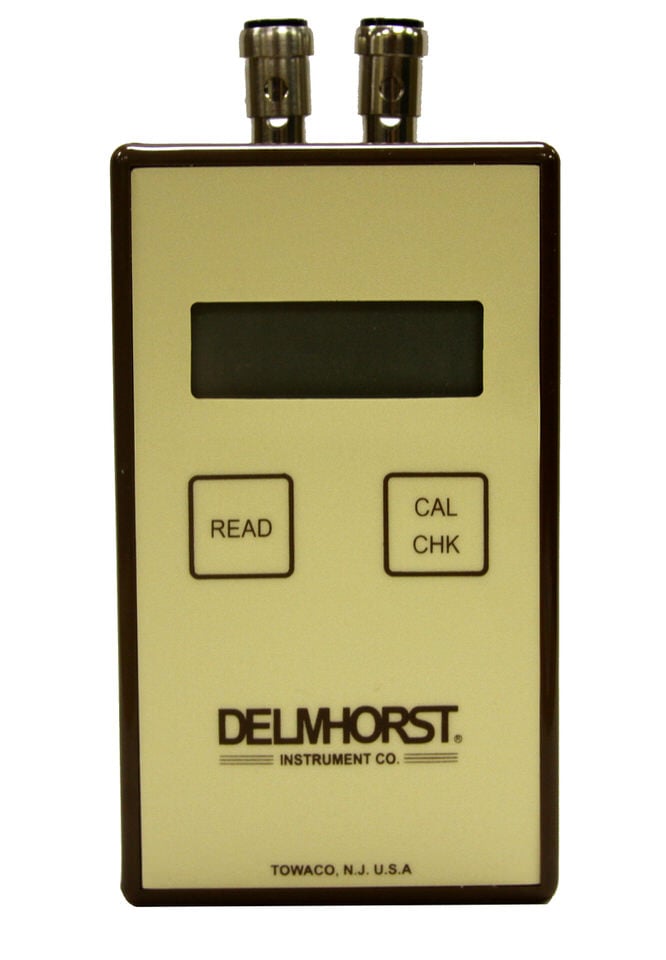
| KS-D1 |
|
|

|
Specifications:
- Range:
0.1 to 15 Bars Tension
- Display:
3 1/2 Digital LCD with 0-100 Arbitrary
Scale
- Size:
2 3/4 x 4 3/4 x 1 3/4
- Weight:
8 oz.
- Battery:
1-9V
- Carrying
Case: included
|
|
The
KS-D1 Digital Soil Moisture Tester, used with the GB-1 Gypsum
Soil Blocks, make up a valuable system to monitor the soil
moisture available to the plants. This system eliminates guesswork

so that irrigation can be effectively scheduled according
to plants' requirements. The KS-D1, housed in a rugged ABS
plastic case, features reliable temperature stable semi-conductor
technology with internal battery and calibration checks for
users' full confidence. A membrane switch panel provides positive,
tactile feel. Spring-loaded binding posts allow for positive
contact with the blocks' leads.
Advantages:
The importance of water to plant growth is well known. Also,
effective irrigation should be properly controlled in quantity
and timing. Continuous and
appropriate use of soil moisture testing devices can
effectively aid in obtaining maximum crop yield at
optimum quality levels and conserve water.
Eliminate:
- Under-irrigation
thus preventing wilting, and making fertilizer application
more efficient.
- Over-irrigation
with remarkable savings in power, labor, and water.
Prevent:
Soil spoilage due to excessive water and poor drainage.
Realize:
Bigger and better crops at lower cost.
Sensors
| GB-1
Gypsum Blocks |
|
|

|
The
blocks are made of gypsum, cast around two concentric,
stainless steel electrodes. They are
manufactured under controlled conditions to obtain
a maximum degree of uniformity and fast response
to soil moisture changes. The GB-1 measures 7/8
dia. x 1 1/8 in height. It is the most
widely used sensing unit, easy to install and
especially suited for extensive sampling of soil
at various depths.
|
|
Simple
Operation:
The blocks are buried in representative areas in the field
to monitor soil moisture changes in the area of active root
growth. They are buried at one or more levels, depending on
the crop and the depth of the root zone. When the blocks
lead wires are connected to the meter, an indication of the
available soil moisture is immediately obtained on the meter
display. The meter readings can be converted into terms of
available soil moisture or soil moisture tension by referring
to calibration curves, which are part of the operating instructions.
|